On-device reactions
Oneira's expressive reactions run on the device, so its face can respond without relying on a cloud request.
See the local coreArchitecture guide / device to agent
Understand the physical AI agent interface pattern: a device starts a request, an app enforces permission, and a configured model, agent, or connected tool does the work.
Product status
Working today means the expressive face has been demonstrated on a real Oneira device.
Connected beta features require the Oneira app, internet access, a compatible service, and permissions you approve. They can change and may not work with every service.
The short answer
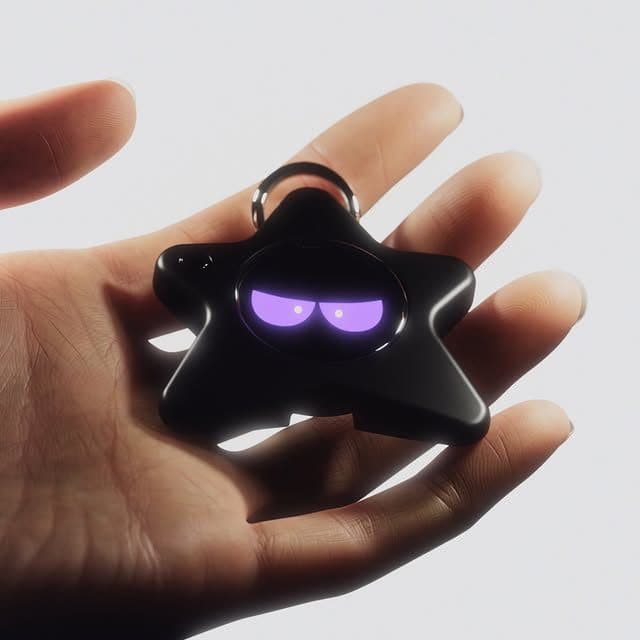
Oneira Dream Big+
Small enough to look playful. Built with a dual AI chip, OLED screen, and 1K camera, plus optional connected experiences you control.
Each $80 Founding Unit includes one Oneira device with a dual AI chip, OLED screen, and 1K camera, plus the selected color and included eye set. The 1K camera is included; its final production module and other non-material production details may change before fulfillment. Optional connected services, provider accounts, usage, and third-party fees are separate.
Oneira's expressive reactions run on the device, so its face can respond without relying on a cloud request.
See the local coreThe working prototype includes a dual ai chip, oled screen, and 1k camera. The 1K camera is included in the $80 Founding Unit; its final production module may change before fulfillment.
Inspect the hardwareOptional compatible connected services can extend Oneira when you choose. Setup, permissions, internet access, provider terms, and usage costs remain separate. Connected experiences work only with compatible services the owner deliberately configures. Oneira does not connect automatically to every service.
See compatible connectionsCompatible connected tools are optional and owner-configured. Nothing is preconfigured, and universal compatibility is not promised.
See connected featuresThe 1K camera supports deliberate, owner-triggered experiences. Optional Dream creation can transform a photo when the owner chooses it.
Open Oneira CreateOptional helper experiences have narrow, visible limits. Broader research, coding, and workspace actions remain in development.
Understand the agent pathA simple flow
Captures an intentional input or shows a brief output
Checks permission, context, service, and network
Handles the configured task and returns a result
Why physical
A physical action can clarify when the user is asking, which object is involved, and when the system should stop. That is useful for companions, controllers, accessibility surfaces, and tools used away from a full computer.
The interface should communicate state rather than hide autonomy behind a friendly shape.
Why an app
Pairing, authentication, provider selection, permissions, logs, and revocation are difficult to explain on a tiny display. The app is the appropriate place for those durable decisions.
The device can remain focused on quick intent and concise feedback.
Why modular
When the physical interface is separated from the configured model, agent, or connected service, the owner can choose a different compatible service without turning the hardware into a disposable shell for one provider.
Compatibility still requires testing, and provider rules, accounts, data handling, reliability, and fees remain separate.
Interface design / let the object clarify intent
Physical AI interfaces matter when they give an abstract request a clear beginning. A touch, press, movement, or concise on-screen state can make it obvious that the owner is asking a tool to do something. Oneira contributes a current on-device layer—motion-reactive animated expression—then uses the Oneira app for real Connected beta access to optional compatible connected tools and services. The product is not claiming that the agent lives inside the device or that every external service is supported.
This separation is a design feature as much as a technical one. The small device can remain focused on intent and a short response, while the app presents setup, permissions, activity, and revocation controls. Connected services retain their own account rules, availability, costs, and behavior changes. Sight has its own consent-led Connected beta boundary: an owner triggers one visual frame. Everyone present must agree before an owner-triggered Sight capture. Translation and creator assistance are still in development, not an automatic extension of the interface.
Decision framework
The activation moment should be legible to the owner and the people nearby. A physical interface is strongest when it avoids ambient, surprising, or invisible requests. The object should communicate that a connected action has started, what kind of action it is, and whether it awaits input, confirmation, a result, or recovery.
Questions, answered
It can, but it does not have to. Oneira runs its expression layer locally while optional compatible connected requests route through the app to separate services.
A dedicated object can make the interaction faster, more legible, and more characterful. The phone remains important for setup, permissions, account management, and complex review.
Potentially, when another service is compatible with the Oneira app and the owner configures it. Universal compatibility is not promised.
Clear activation, visible destination, narrow permissions, confirmation for consequential actions, reviewable output, logs, and easy revocation.
Oneira / current availability
500 Drop 01 units remain across 5 currently available colors. Availability is confirmed when secure checkout begins.
Preorder a Founding Unit · $80Oneira's focused helpers have narrow, visible limits. Broader research, coding, and approved-workspace actions remain in development.
A small screen cannot safely explain account choices, service permissions, long output, or revocation options. Oneira uses the app to present Connected beta setup and controls. Evaluate whether that larger-screen setup is clear enough to show what each connection may access.
The advantage of a modular interface is that an optional compatible connected tool or service can be selected for a defined job. Compatibility is not universal and can change with the app, credentials, service terms, or network. Make the exact connection testable and replaceable.
Expression can make a device welcoming, but it must not disguise consequential work. Require explicit confirmation for actions that send, spend, publish, delete, modify, or disclose. Prefer an interface that can say it is blocked or uncertain over one that turns every agent response into an unqualified success animation.
Good fit
Choose differently