On-device reactions
Oneira's expressive reactions run on the device, so its face can respond without relying on a cloud request.
See how reactions workMaker guide / wire, build, share
What makers should demand from an AI device: real buses, a developer mode, a way to share builds, and updates without a toolchain. Oneira ships the loop.
Product status
Working today means the expressive face has been demonstrated on a real Oneira device.
Connected beta features require the Oneira app, internet access, a compatible service, and permissions you approve. They can change and may not work with every service.
The short answer
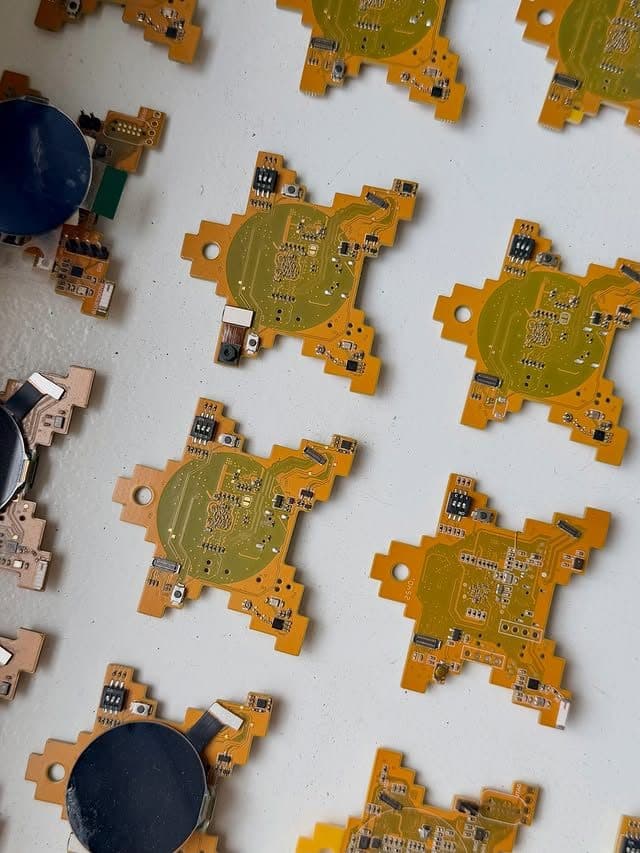
Oneira Dream Big+
Small enough to look playful. Built with a dual AI chip, OLED screen, and 1K camera, plus optional connected experiences you control.
Each $80 Founding Unit includes one Oneira device with a dual AI chip, OLED screen, and 1K camera, plus the selected color and included eye set. Only the final 1K camera module may change before fulfillment. Optional connected services, separate accounts, usage, and third-party fees are not included.
Oneira's expressive reactions run on the device, so its face can respond without relying on a cloud request.
See how reactions workThe working prototype includes a dual AI chip, OLED screen, and 1K camera. The dual AI chip, OLED screen, and 1K camera are included in the $80 Founding Unit; only the final 1K camera module may change before fulfillment.
See included hardwareOptional compatible connected services can extend Oneira when you choose. Setup, permissions, internet access, service terms, accounts, usage, and fees remain separate. Connected experiences work only with compatible services the owner deliberately configures. Oneira does not connect automatically to every service.
See compatible connectionsCompatible connected tools are optional and owner-configured. Nothing is preconfigured, and universal compatibility is not promised.
See connected featuresThe 1K camera supports deliberate, owner-triggered experiences. Optional Dream creation can transform a photo when the owner chooses it.
Open Oneira CreateOptional helper experiences have narrow, visible limits. Broader research, coding, and workspace actions remain in development.
Understand the agent pathThe demand list
Most AI devices are sealed appliances: the intelligence is interesting, but nothing on the outside connects to a breadboard, and nothing you make can live on the device. For a maker that is a decorative purchase.
The demand list is short. Can it reach real electronics over standard buses? Is there a mode intended for building? Can a finished project be shared with and installed by other owners? And can firmware stay current without maintaining a toolchain?
The buses
Oneira ships hardware tools on GPIO, I2C, SPI, and UART. Generically, those classes divide the bench between them: on/off pins for switches, LEDs, and relays; a shared two-wire bus where clusters of small sensors live; a faster short-range bus for displays and memory; and plain serial for talking to another board.
Oneira publishes the buses, not electrical numbers — pin counts, voltages, and current limits are not yet published. Plan a project around the bus class it needs, then check the current documentation before committing a circuit design.
Build and share
Developer Mode ships on Oneira as the building family, and community apps ship as the path outward — the difference between a project that lives on your bench and one other owners can install. SDK, language, and toolchain details are not yet published, so this guide claims none.
Updates follow the same low-friction rule: Oneira's firmware installs from a browser over USB, and its public manifest lists the ESP32-S3 chip family makers already know from devboards. A familiar foundation, with no toolchain required to stay current.
Sources and scope
This independent comparison is not sponsored or endorsed by the compared company. Product names and trademarks belong to their respective owners.
Questions, answered
Reachable buses, a mode intended for building, a way to share finished work, and updates that do not require a build environment. A capable chip inside a sealed case fails the test.
Hardware tools on GPIO, I2C, SPI, and UART — the four classes most hobby electronics already use.
Not yet published. Design around the bus classes and check the current documentation before depending on specific electrical numbers.
Treat anything on household mains as a qualified electrician's work, whatever device is on the bench. Oneira's hardware tools are scoped to low-voltage hobby electronics.
No Oneira subscription is required for the core product. Components, boards, and any third-party services in your projects are your own purchases.
Oneira / current availability
500 Drop 01 units remain across 5 currently available colors. Availability is confirmed when secure checkout begins.
Preorder a Founding Unit · $80