On-device reactions
Oneira's expressive reactions run on the device, so its face can respond without relying on a cloud request.
See how reactions workIndependent comparison / build or buy
Raspberry Pi 5 is the everything computer you assemble. Oneira is a finished $139 pocket AI companion on ESP32-S3. A build-versus-buy guide for makers.
Product status
Working today means the expressive face has been demonstrated on a real Oneira device.
Connected beta features require the Oneira app, internet access, a compatible service, and permissions you approve. They can change and may not work with every service.
The short answer
Oneira Dream Big+
Small enough to look playful. Built with a dual AI chip, OLED screen, and 1K camera, plus optional connected experiences you control.
Each $80 Founding Unit includes one Oneira device with a dual AI chip, OLED screen, and 1K camera, plus the selected color and included eye set. Only the final 1K camera module may change before fulfillment. Optional connected services, separate accounts, usage, and third-party fees are not included.
Oneira's expressive reactions run on the device, so its face can respond without relying on a cloud request.
See how reactions workThe working prototype includes a dual AI chip, OLED screen, and 1K camera. The dual AI chip, OLED screen, and 1K camera are included in the $80 Founding Unit; only the final 1K camera module may change before fulfillment.
See included hardwareOptional compatible connected services can extend Oneira when you choose. Setup, permissions, internet access, service terms, accounts, usage, and fees remain separate. Connected experiences work only with compatible services the owner deliberately configures. Oneira does not connect automatically to every service.
See compatible connectionsCompatible connected tools are optional and owner-configured. Nothing is preconfigured, and universal compatibility is not promised.
See connected featuresThe 1K camera supports deliberate, owner-triggered experiences. Optional Dream creation can transform a photo when the owner chooses it.
Open Oneira CreateOptional helper experiences have narrow, visible limits. Broader research, coding, and workspace actions remain in development.
Understand the agent pathThe everything computer
Raspberry Pi calls the Pi 5 the everything computer, optimised — and earns it: a Broadcom BCM2712 with a 2.4GHz quad-core 64-bit Arm Cortex-A76, RAM options from 1GB to 16GB, dual-band 802.11ac Wi-Fi, Bluetooth 5.0 with BLE, and the standard 40-pin GPIO header an entire HAT ecosystem plugs into.
It is deliberately unfinished. You choose the OS, storage, power supply, cooling, and case, and that openness is the point: the Pi becomes whatever you assemble. A $70 AI Kit and the AI HAT+ can add generative-AI acceleration when a project calls for it.
The finished object
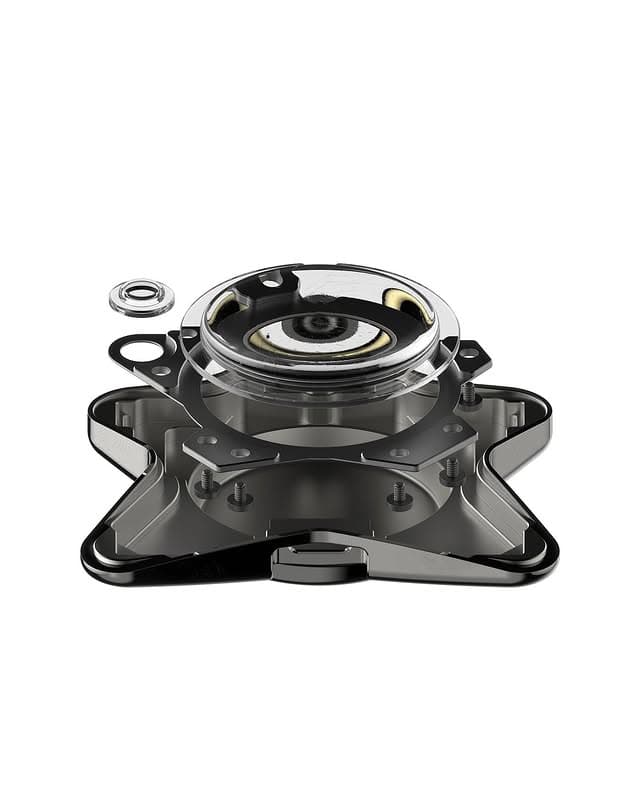
Oneira is the other answer to the same maker instinct: a completed, star-shaped, palm-sized product on the ESP32-S3 family — its public firmware manifest says so — with a round 466×466 AMOLED, a six-axis IMU, a USB-C rechargeable battery, and firmware you update from a browser.
The AI side arrives assembled too: multi-model AI, agents, MCP servers, custom APIs, integrations, one-tap actions, and automations ship on the product, with a character included. For hardware play, the buses are ready — hardware tools on GPIO, I2C, SPI, and UART — plus developer mode and community apps for going further.
Decision
Raw computing power and ecosystem breadth are not close: the Pi 5 wins both, and any project that needs Linux, big memory, monitors, or the HAT catalog belongs on a Pi. Price depends on what you build — a 16GB board alone lists at $305, lower-RAM boards cost less, and storage, power, and a case add up from there.
Oneira wins when the thing you want is the pocket companion itself: $139, assembled, in character, and pointed at AI from the first charge. Plenty of makers will own both and feel no contradiction.
Side by side
Raspberry Pi facts come from raspberrypi.com's official Pi 5 and AI Kit pages accessed August 2026; this comparison covers a finished pocket product against a single-board computer you configure, not any specific completed Pi build.
| Question | Oneira | Raspberry Pi 5 |
|---|---|---|
| What arrives | A finished pocket companion — charge it and go | A bare board; you choose OS, storage, power, cooling, and case |
| Computing power | ESP32-S3-class microcontroller platform | 2.4GHz quad-core Arm Cortex-A76, 1GB to 16GB RAM |
| Price | $139 per Drop 01 edition, complete | Varies by configuration; the 16GB board alone is $305, and complete builds add parts |
| AI out of the box | Multi-model AI, agents, MCP servers, and integrations shipped | You assemble it; a $70 AI Kit or AI HAT+ adds generative-AI acceleration |
| Ecosystem | Developer mode and community apps on one product | Vast OS, HAT, and accessory ecosystem |
| Hardware buses | Hardware tools on GPIO, I2C, SPI, UART | Standard 40-pin GPIO header the HAT catalog plugs into |
| Networking | Bluetooth LE and Oneira-to-Oneira; connected AI routes through the app | Dual-band 802.11ac Wi-Fi and Bluetooth 5.0/BLE on board |
| Pocketability | Star-shaped, palm-sized, USB-C rechargeable | A board for benches and enclosures; portable only if you build it |
Sources and scope
This independent comparison is not sponsored or endorsed by the compared company. Product names and trademarks belong to their respective owners.
Questions, answered
Only for one specific project: a pocket AI companion. For general computing — Linux desktops, servers, robotics controllers, media boxes — the Pi 5 is the right tool and Oneira does not compete there.
Buy a Pi 5 when the build is open-ended and needs real computing power, an OS, or the HAT ecosystem. Buy Oneira when the result you want is a finished pocket companion with AI tools, character, and exposed buses for $139. Many makers reasonably own both.
The Pi 5, decisively — a 2.4GHz quad-core Arm Cortex-A76 with up to 16GB of RAM against Oneira's ESP32-S3-class microcontroller. Oneira spends its silicon on being a finished low-power companion, not on competing with a single-board computer.
Run a general-purpose OS and desktop software, drive monitors, use the 40-pin HAT ecosystem, and offer on-board Wi-Fi networking. Oneira's published wireless capabilities are Bluetooth LE and Oneira-to-Oneira, with connected intelligence routed through the Oneira app, and its electrical pin details are not yet published.
Oneira is $139 complete per Drop 01 edition. Pi 5 pricing varies by configuration: the 16GB board alone lists at $305, lower-RAM variants cost less, and a working build still needs storage, a power supply, and usually a case.
Oneira / current availability
500 Drop 01 units remain across 5 currently available colors. Availability is confirmed when secure checkout begins.
Preorder a Founding Unit · $80