On-device reactions
Oneira's expressive reactions run on the device, so its face can respond without relying on a cloud request.
See how reactions workMaker tutorial / what attaches where
What you can attach to an AI device with GPIO, I2C, SPI, and UART: the peripheral families each bus serves, and how to plan Oneira hardware expansion projects.
Product status
Working today means the expressive face has been demonstrated on a real Oneira device.
Connected beta features require the Oneira app, internet access, a compatible service, and permissions you approve. They can change and may not work with every service.
The short answer
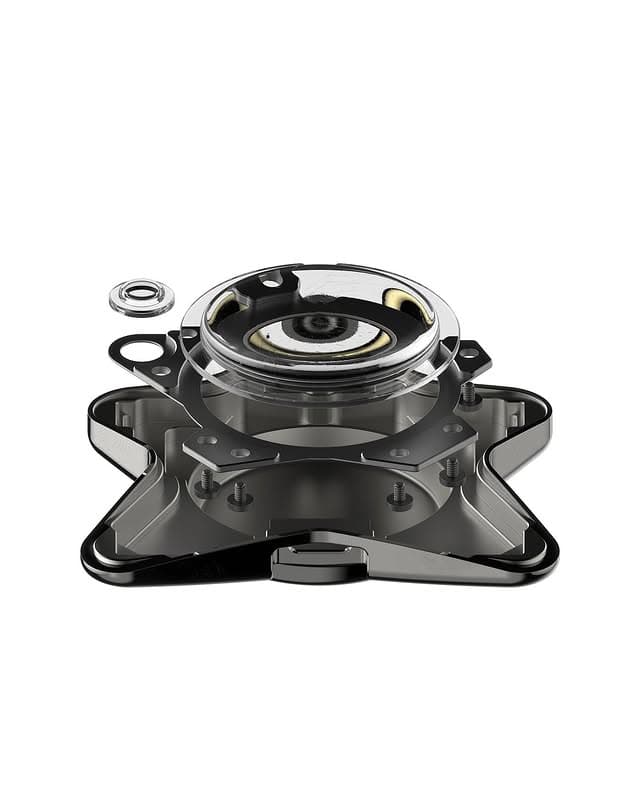
Oneira Dream Big+
Small enough to look playful. Built with a dual AI chip, OLED screen, and 1K camera, plus optional connected experiences you control.
Each $80 Founding Unit includes one Oneira device with a dual AI chip, OLED screen, and 1K camera, plus the selected color and included eye set. Only the final 1K camera module may change before fulfillment. Optional connected services, separate accounts, usage, and third-party fees are not included.
Oneira's expressive reactions run on the device, so its face can respond without relying on a cloud request.
See how reactions workThe working prototype includes a dual AI chip, OLED screen, and 1K camera. The dual AI chip, OLED screen, and 1K camera are included in the $80 Founding Unit; only the final 1K camera module may change before fulfillment.
See included hardwareOptional compatible connected services can extend Oneira when you choose. Setup, permissions, internet access, service terms, accounts, usage, and fees remain separate. Connected experiences work only with compatible services the owner deliberately configures. Oneira does not connect automatically to every service.
See compatible connectionsCompatible connected tools are optional and owner-configured. Nothing is preconfigured, and universal compatibility is not promised.
See connected featuresThe 1K camera supports deliberate, owner-triggered experiences. Optional Dream creation can transform a photo when the owner chooses it.
Open Oneira CreateOptional helper experiences have narrow, visible limits. Broader research, coding, and workspace actions remain in development.
Understand the agent pathA simple flow
Name what the project should sense or switch
Match it to the bus that class of part uses
Verify one peripheral before combining any
GPIO family
GPIO peripherals live in the world of single signals: a switch or button reporting pressed or not, an LED showing a state, a relay module closing a low-voltage circuit on command. One pin, one meaning.
This family is where expansion projects should start, because every part in it can be verified by eye. If the LED lights or the relay clicks, the whole chain worked, and you learned that in seconds.
I2C family
I2C carries the largest family in hobby electronics: small sensor boards for temperature, humidity, light, motion, and many related classes, all sharing the same two wires with each device answering at its own address.
That sharing is the point. A project can grow from one sensor to a small cluster without a new wiring topology, which is why makers keep a shelf of I2C boards the way cooks keep spices.
SPI and UART families
SPI trades extra wires for speed, which suits peripherals that move real data at short range: small displays and memory are the classic members of the family.
UART is the elder of the four — a plain serial link between two devices, one line in each direction. Its family is modules and other boards: anything that presents itself as a serial device can hold a conversation over UART.
On Oneira
Oneira ships hardware tools on GPIO, I2C, SPI, and UART today, and its public firmware manifest lists the chipFamily as ESP32-S3 — useful lineage context for makers who already know that platform. What is not yet published: Oneira-specific pin counts, voltage levels, and current limits.
So plan by family rather than by assumed numbers, and check current documentation before a design depends on a specific electrical figure. The scope is low-voltage hobby electronics throughout; expansion means sensors and modules on a bench, not house wiring.
Sources and scope
This independent comparison is not sponsored or endorsed by the compared company. Product names and trademarks belong to their respective owners.
Questions, answered
Think in families: switch, button, LED, and relay-class parts on GPIO; the wide class of small shared-bus sensors on I2C; display and memory-class peripherals on SPI; serial modules and other boards over UART. Which exact part fits is a per-project decision, as on any host.
Oneira-specific pin counts and electrical limits are not yet published. Check current documentation before a circuit depends on a specific number, and plan around the bus families in the meantime.
The public firmware manifest lists chipFamily ESP32-S3, which tells you the platform lineage. It does not tell you Oneira's exposed pins or limits — those wait on published documentation.
One GPIO part with a visible result — an LED or a relay click — then one I2C sensor read. Verify each on its own before combining anything.
Not yourself. Household mains wiring — anything on the supply side of a wall plug — belongs to a qualified electrician. Oneira's hardware tools are scoped to low-voltage hobby electronics.
Oneira / current availability
500 Drop 01 units remain across 5 currently available colors. Availability is confirmed when secure checkout begins.
Preorder a Founding Unit · $80