What Is a Dream Camera? From Pictorialism to AI-Rendered Moments
The idea of a camera that renders moments as dreamlike art instead of literal records has a long history. Here is where it came from, how AI changed it, and Oneira's take.
Josiah Love··6 min read
A dream camera inverts the usual contract of photography. A normal camera promises fidelity: this is what the light did, at this instant, in front of this lens. A dream camera promises something else — this is what the moment felt like. It takes a real instant and renders it as art: softened, heightened, rearranged by an aesthetic logic closer to memory than to optics.
We make Oneira, so this piece ends at our own doorstep — but the idea is much older than us, and understanding its history makes the modern AI version easier to judge on its merits.
The old argument: is a photograph a record or a picture?
Photography spent its first century arguing about its own soul. One camp held that the camera's gift was mechanical truth — an incorruptible witness. The other camp found that gift boring, and set about corrupting it beautifully. The pictorialists, a movement that flourished around the turn of the twentieth century, shot through soft-focus lenses, manipulated their prints by hand, and composed like painters. Their goal was explicit: photographs that behaved like art, conveying mood and atmosphere rather than inventory-grade detail.
They were working in parallel with a broader shift in painting. The impressionists had already argued that a canvas should capture the sensation of a scene — the shimmer of light on water, the blur of a crowd — rather than its architectural blueprint. Put the two movements together and you get the intellectual DNA of every dream camera since: the moment matters, but the feeling of the moment matters more.
Photography's mainstream eventually swung hard the other way, toward sharpness and documentary honesty, and pictorialism fell out of fashion. But the impulse never died. It survived in soft-focus portrait lenses, in cross-processed film, in toy cameras with light-leaking plastic bodies, and eventually in the filter decks of every phone. People have always wanted at least one camera that lies a little, in the direction of how things felt. The market kept proving it decade after decade, in whatever technology the moment offered.
What AI changed
Every earlier dreamlike technique — soft lenses, hand-worked prints, filters — was subtractive or corrective: it degraded or tinted a literal image. Generative AI changed the verb. A modern dream camera does not blur reality; it re-imagines it. The captured frame becomes a seed, and a generative model synthesizes a new image that keeps the gesture of the moment while inventing its surfaces, light, and sometimes its physics.
That is a genuinely different artifact. A filtered photo is still evidence with makeup on. A generated Dream is closer to a painting somebody made of your moment — which is, notably, exactly what the pictorialists were reaching for with glass plates and gum bichromate. The technology finally caught up to a hundred-year-old ambition.
What separates a dream camera from a filter app
Synthesis over correction. A filter adjusts pixels that exist; a dream camera generates pixels that never existed, guided by the original.
Interpretation over consistency. Filters apply the same recipe to every image. A generative render responds to the content of the moment, so no two outputs feel stamped from one mold.
Artifact over archive. The point is a piece of art about a moment, not a searchable record of it — which opens the door to designs where the literal photo need not be kept at all.
Occasion over volume. Filters encourage shooting everything and sorting later. A dream camera rewards choosing a moment worth translating.
Oneira's take: private, ephemeral, consent-first
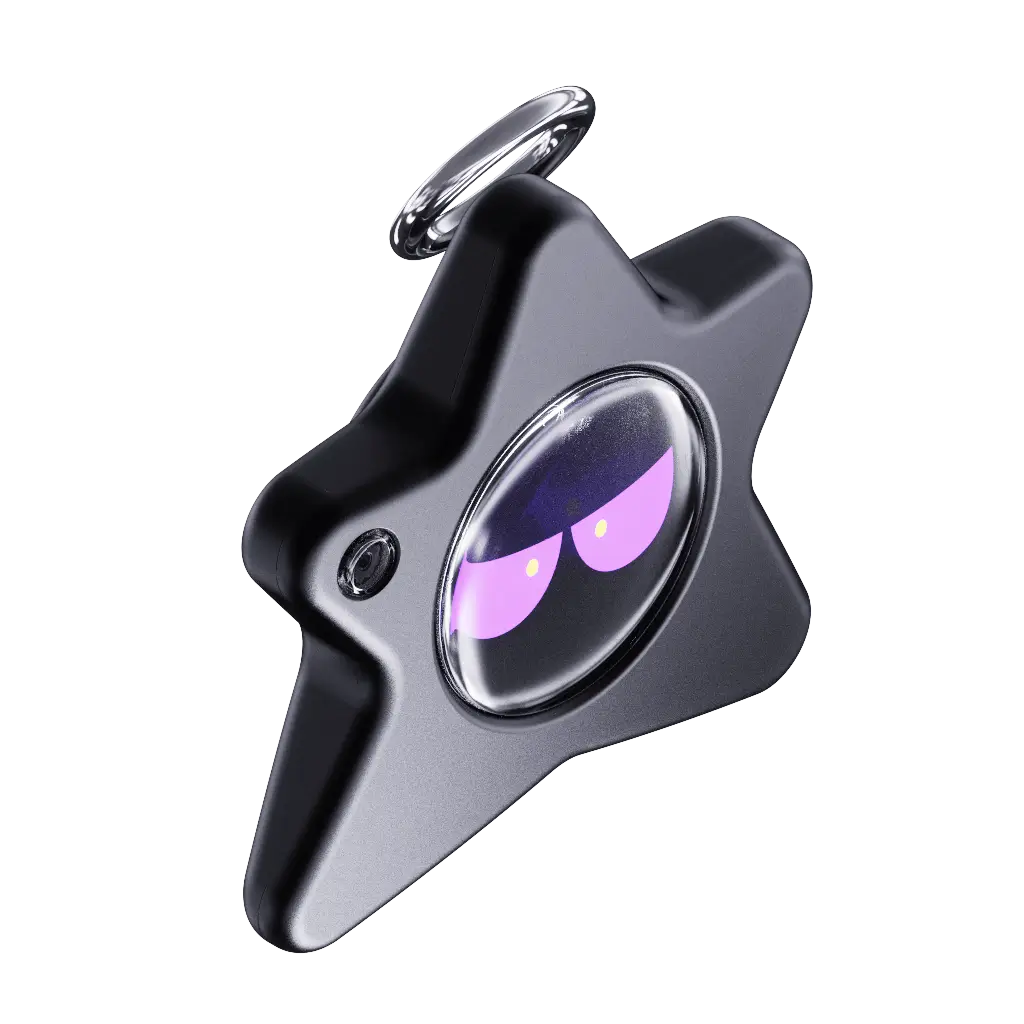
Our version of the idea is Oneira Dream, built around Oneira — a $139 expressive pocket companion from JML Tech Studios with an animated face, wandering eyes, and moods that shift through the day. No feed, no subscription, no app account requirement. Dreams are unlocked with a device code, and three design decisions define how we handle the questions above.
First, the original camera frame is not saved — it seeds the artwork and is discarded, so no literal record accumulates anywhere. Second, the generated photo auto-deletes after 24 hours; a Dream is an occasion, not an archive, and if you love one you save it while it lives. Third, consent is a rule, not a suggestion: only create a Dream when everyone visible has agreed. Re-imagining someone is still picturing them.
The ephemerality is aesthetic as much as protective. Dreams — the ones you have at night — do not persist on demand; they surface, vivid and strange, then fade unless you make an effort to hold them. A dream camera whose outputs behaved like permanent files would be missing its own metaphor.
Who a dream camera is for — and who it is not
An honest scope note. If you want a complete, retrievable record of your life — every birthday candid, every document, every receipt — a dream camera is the wrong tool, and no amount of artistry changes that. Keep a conventional camera for evidence, and let the dream camera stay unburdened by the job of remembering things accurately.
A dream camera earns its place as the second camera: the one you reach for when a moment deserves interpretation rather than documentation. A late dinner that felt golden. A friend laughing in a way no literal photo ever captures. The community around this kind of image-making is small but lively — our own corner of it lives at Oneira IRL, a photo feed with monthly challenges and a creator of the week.
If the idea pulls at you, Oneira's Drop 01 is 500 paid units shared across eight editions — Snow, Lilac, Azure, Midnight, Aluminum, Crystal, Stainless, and Brass — all $139, with a live availability counter on the preorder page. US-only shipping, delivery no later than December 24, 2026, 24-hour buyer-remorse cancellation, and a 90-day limited hardware warranty. Drop 02 opens March 31, 2027, waitlist only.
A camera concept that renders real moments as dreamlike art instead of literal photos. Instead of recording light faithfully, it uses the captured frame as a seed for an interpreted, painterly image — the modern versions use generative AI.
How is a dream camera different from a photo filter?
A filter adjusts pixels that already exist; a dream camera synthesizes a new image guided by the original moment. The result is closer to a painting of the moment than a corrected record of it.
Does Oneira Dream keep the original photo?
No. The original camera frame is not saved — it seeds the generated artwork and is discarded — and the generated Dream auto-deletes after 24 hours unless you save it during that window.
Can I try the dream-camera idea without buying a device?
Yes. Dream Sketch at oneira.cam/oneira/dream/sketch is a free browser toy: type last night's dream and get a unique deterministic artwork. No account, no upload — nothing typed leaves your browser.